

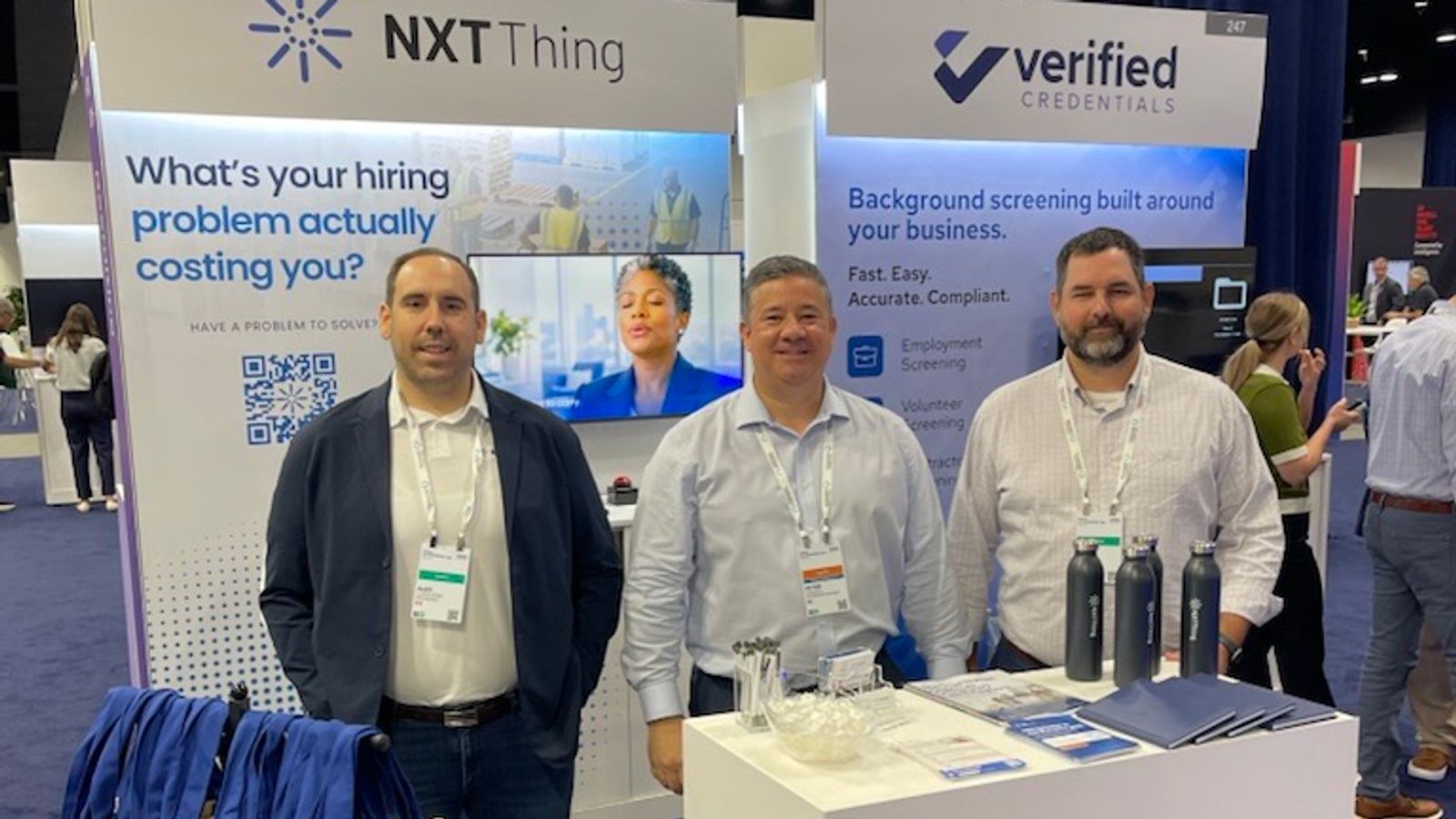
At the Gartner HR Symposium, the conversations we had kept returning to a few questions: Is AI making the work easier? Why does the technology stack still feel disconnected? How can teams handle shifting hiring demand with limited resources? There was curiosity about what technology could do, alongside fatigue with hearing AI presented as the answer to every problem. Here’s three key takeaways, and the actionable insights to bring back to your team.
Three takeaways
- Measure what AI is actually returning.
- Pinpoint where tech and process handoffs break down.
- Define the work before adding recruiting capacity.
Measure what AI is actually returning.
Organizations have invested time and money in AI and automation. Now leaders want to understand where those investments are paying off. Questions we heard included:
- Are recruiters more productive?
- Is cost per hire improving?
- Where has manual work actually decreased?
In our conversations, those answers were often still taking shape. Teams wanted to measure progress but weren’t always sure where to start.
What we recommend
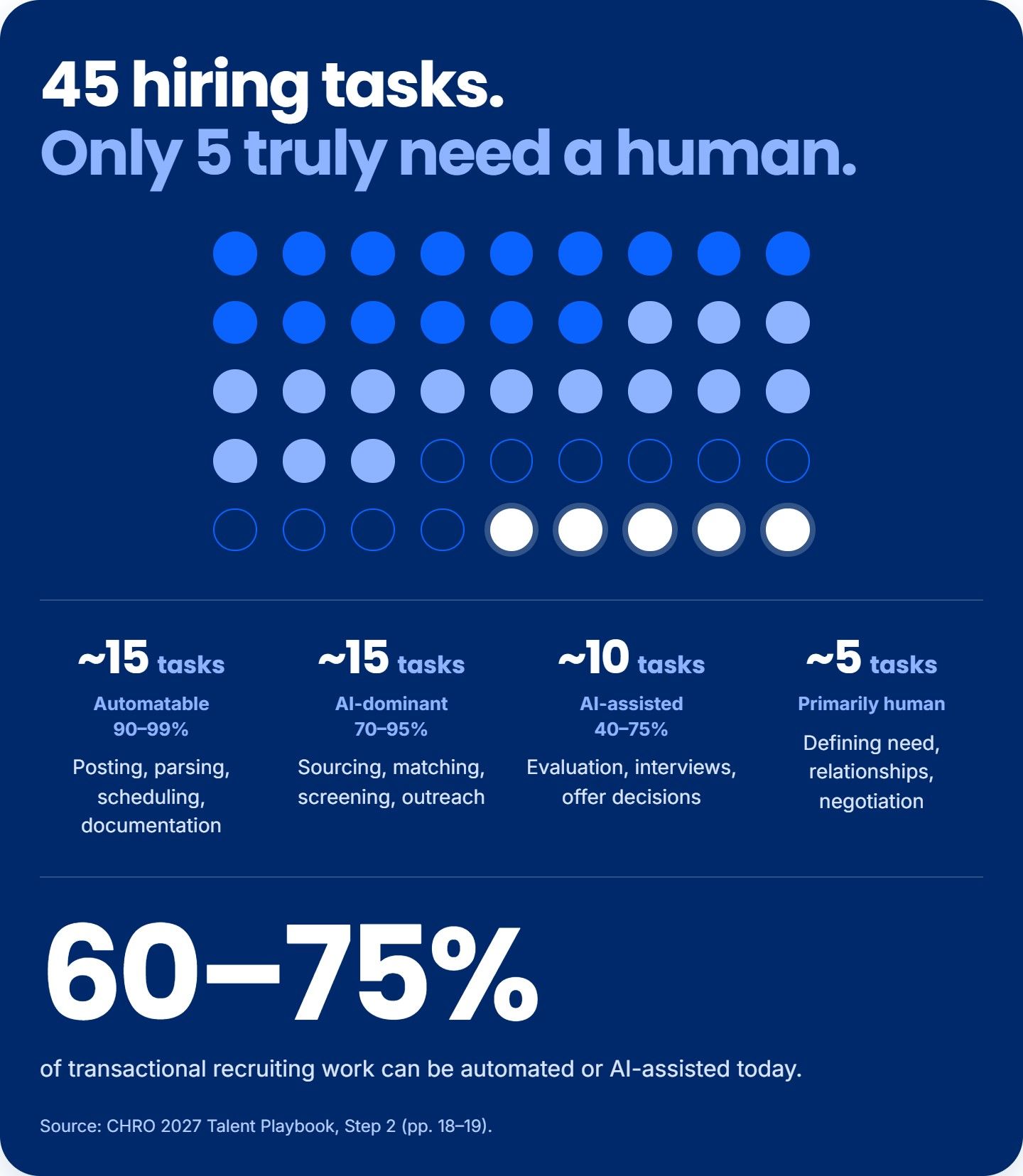
AI isn't the answer to every problem, but it is the answer to some. The trick is knowing which. We broke the hiring process into 45 tasks to find out. Most can move to automation, AI or added support. A handful can't, and those are the ones your team should own.
To put this into practice you can start with one process and the outcome you expected. For example, if you automated interview scheduling, look at the time between application and a booked interview, along with the coordination recruiters still handle.
Simplify, then measure what remains
Then ask what the saved time makes possible. Are recruiters spending more time with qualified candidates? Are Hiring Managers getting the support they need? That gives your team something concrete to evaluate.
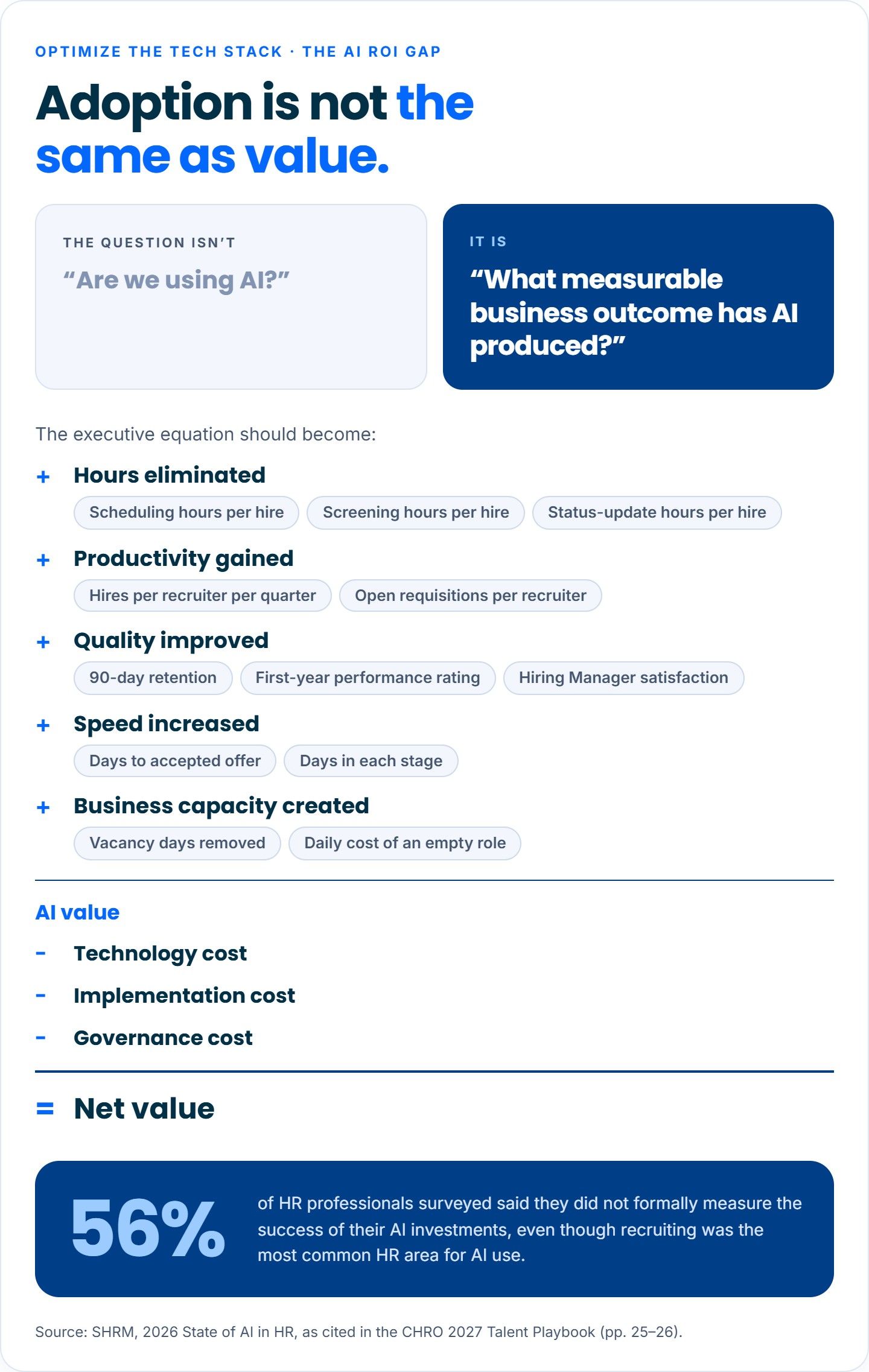
Saved time is only the first line of the ledger. The CHRO 2027 Talent Playbook makes the point plainly: AI adoption doesn’t guarantee a return on investment for your organization. You can deploy AI across recruiting and —like many team we spoke with — struggle to validate a meaningful economic return for the investment of AI.
Instead look at the fuller equation when trying to measure and present the economic value of AI your department is creating.
You can do this by counting the man hours AI has eliminated + the productivity gained + the quality improved + the speed increased and the business capacity created, then subtract what the technology costs to buy, implement and govern.
Simplify, then measure what remains
Measurement is where many teams stall, and a crowded stack makes it harder. In our experience of working with 300+ organization, we’ve seen that many talent acquisition organizations have accumulated technology one solution at a time, leaving an ecosystem that is technologically sophisticated but operationally complicated.
We’ve seen measurable success when teams start simplifying their tech stack first, then measure what remains.
Evaluate every major system against five questions. Does it:
- Improve hiring?
- Reduce cost?
- Increase productivity?
- Improve candidate experience?
- Create actionable intelligence?
If a technology can’t demonstrate meaningful value, it deserves review.
What we recommend
Hold every tool to the same standard. When recruiting tools don’t connect, your team spends more time moving information between them. Personegy brings those tasks together (AI sourcing, career site and chat/text apply, screening, matching and AI voice, and CRM and campaigns) and keeps your ATS up-to-date.
Every score, message and booking is written back, so recruiters stay in the one system they already know. Whatever you use, tie it back to the equation above so you can see what it is returning.
Pinpoint where tech and process handoffs break down.
Dissatisfaction with recruiting technology came up in our conversations, with applicant tracking systems a common example. Leaders were interested in what could work better across their existing processes and tools.
What we recommend
Make the frustration specific. Each answer points toward a different decision: improve how an existing tool is used, clarify ownership, change a workflow, or explore additional technology.
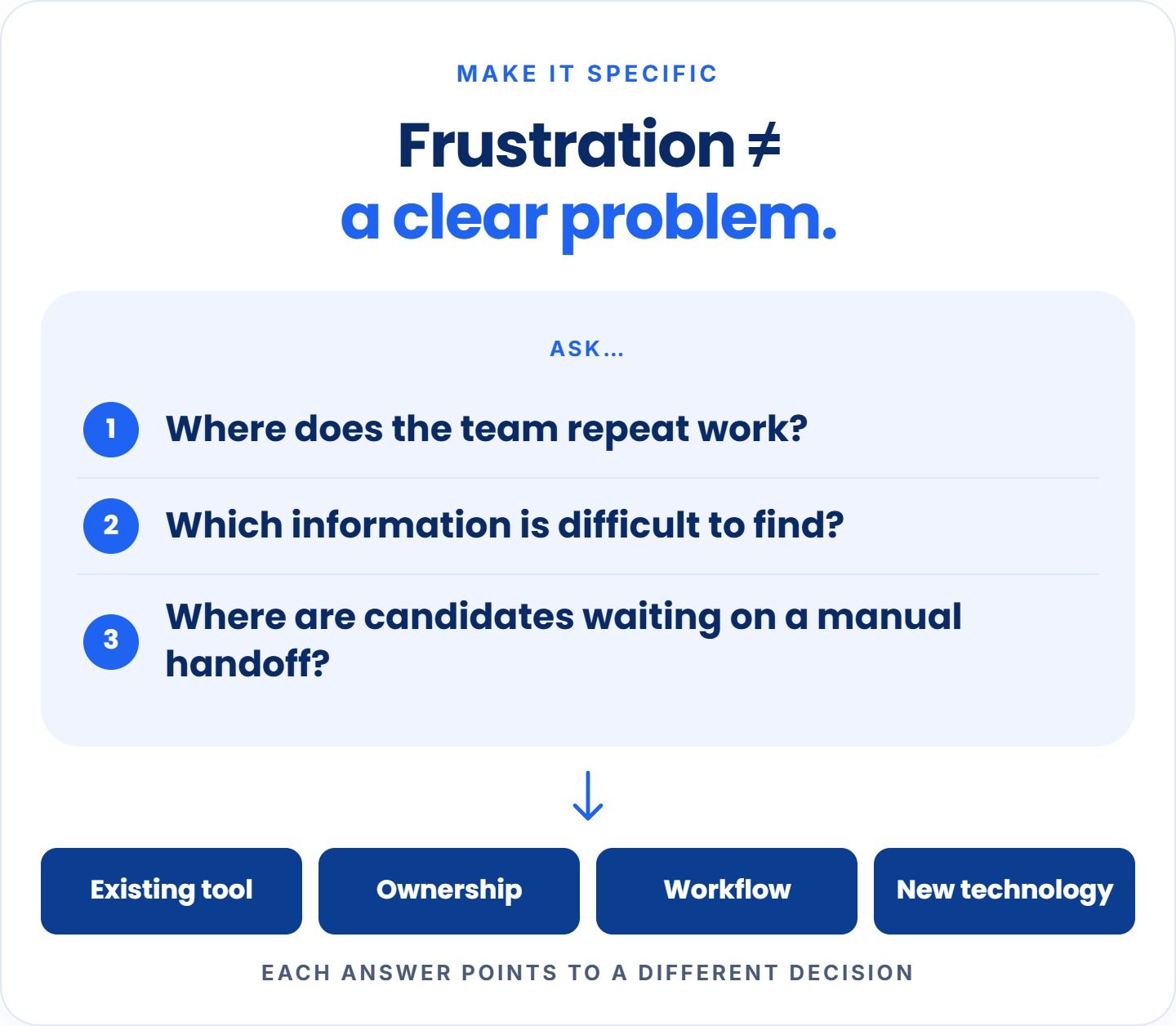
Getting clear on the problem makes it easier to evaluate options and explain what a successful change should accomplish.
Define the work before adding recruiting capacity.
Leaders want recruiters spending quality time with candidates and Hiring Managers, and developing sourcing strategies that reach skilled talent.
High-volume applicant management can compete for that attention, which is prompting interest in technology, automation, and recruiting partners that can take on parts of the workload.
Contract recruiters remain a familiar first response when hiring demand increases. We also heard interest in hybrid recruiting structures, with internal teams retaining selected responsibilities and partners supporting others.
And they are not alone. The CHRO 2027 Talent Playbook cites a 2026 survey of more than 1,200 U.S. recruiters and HR decision-makers: 66% say AI has made their jobs easier, yet the time it saves is not reaching higher-value work.
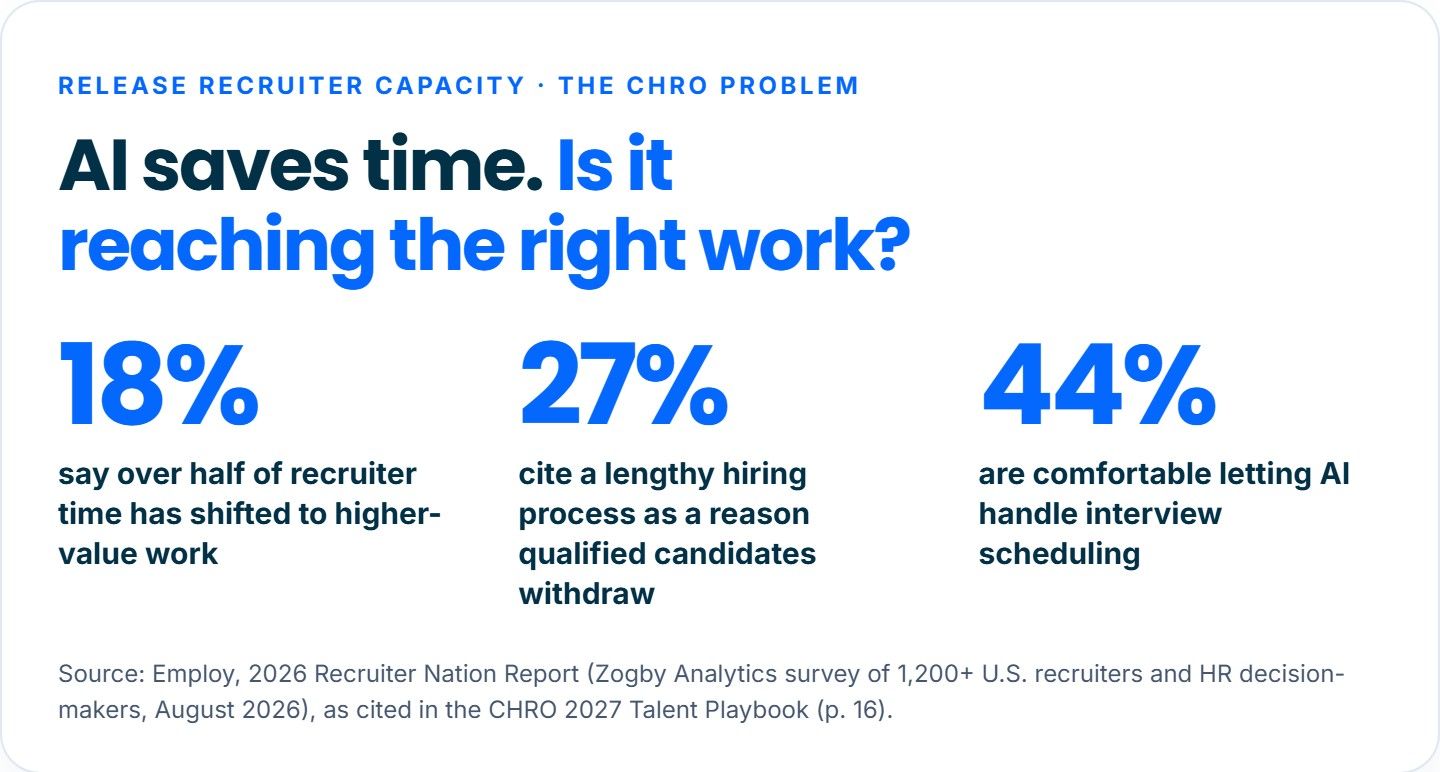
Start With
What is taking time away from the work your recruiters need to focus on?
What we recommend
Look at where work accumulates, how much judgement it requires, and what candidates need at that stage. Then decide which responsibilities belong with internal recruiters and where additional support could help.
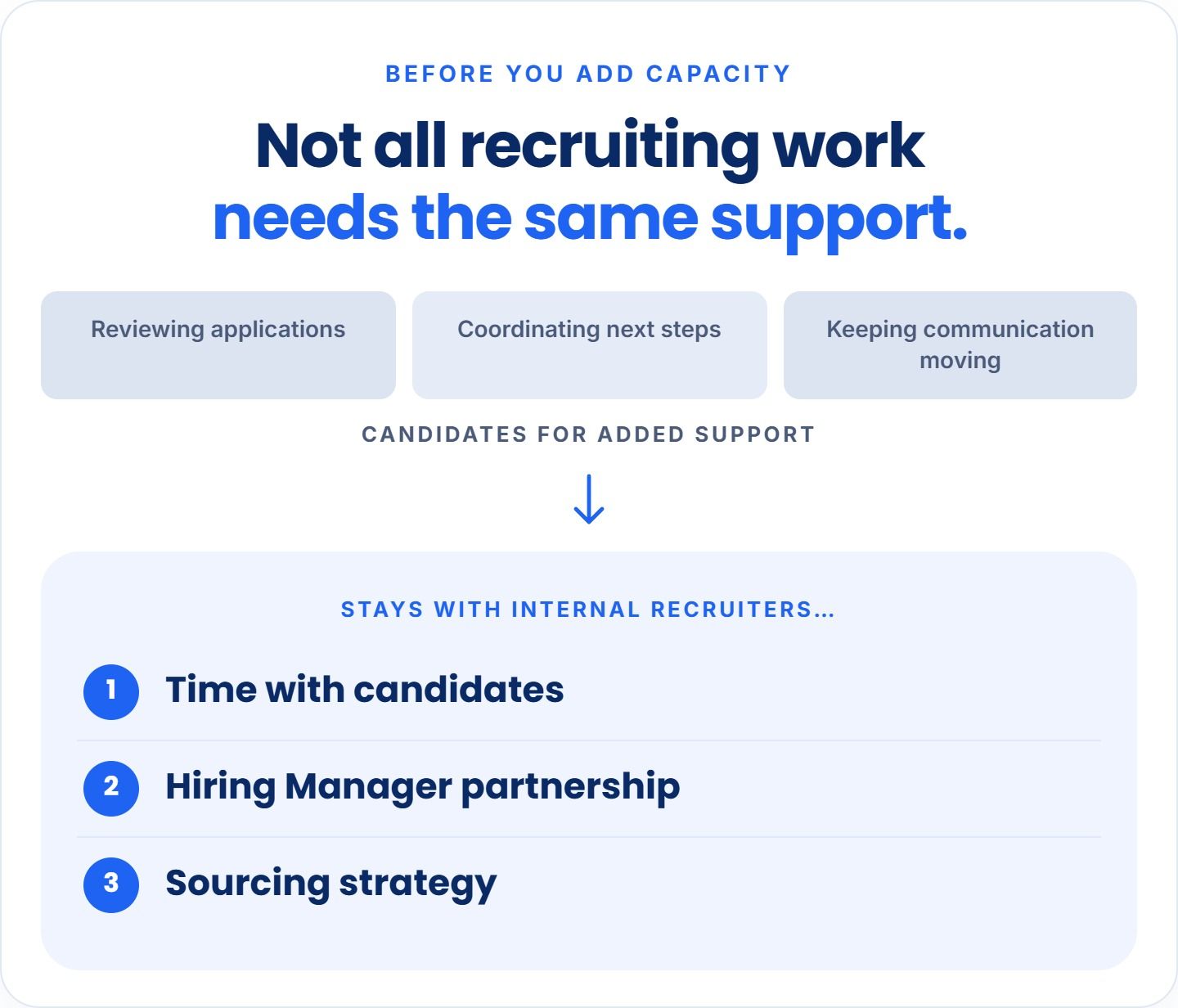
Before adding capacity, define what that capacity needs to deliver.
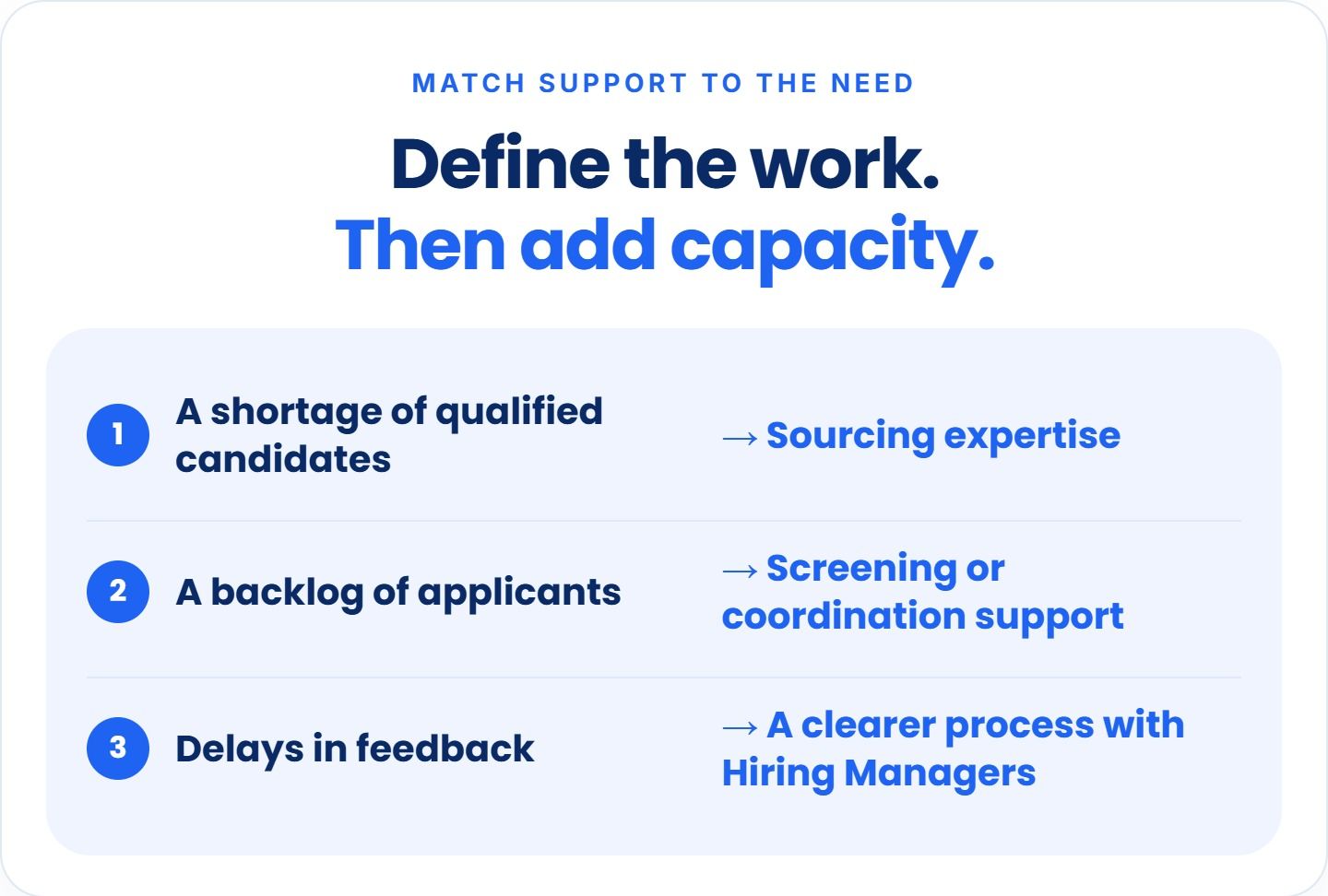
If you bring in a partner, make the scope clear. Cost effectiveness and measurable outcomes matter to that decision, so compare the full cost alongside the work that remains with your team.
- Who owns candidate communication?
- What does the internal team receive?
- How will delays be resolved?
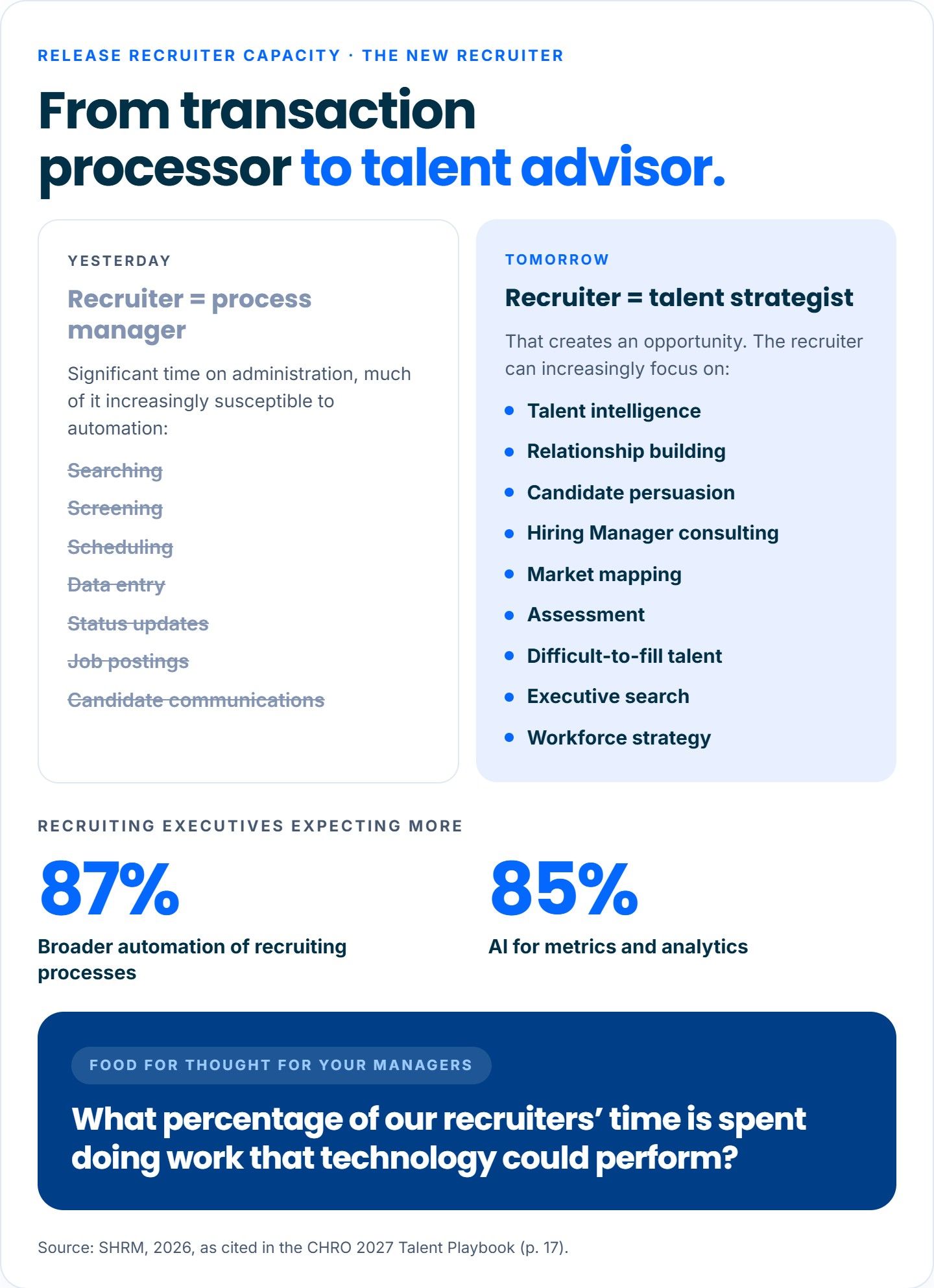
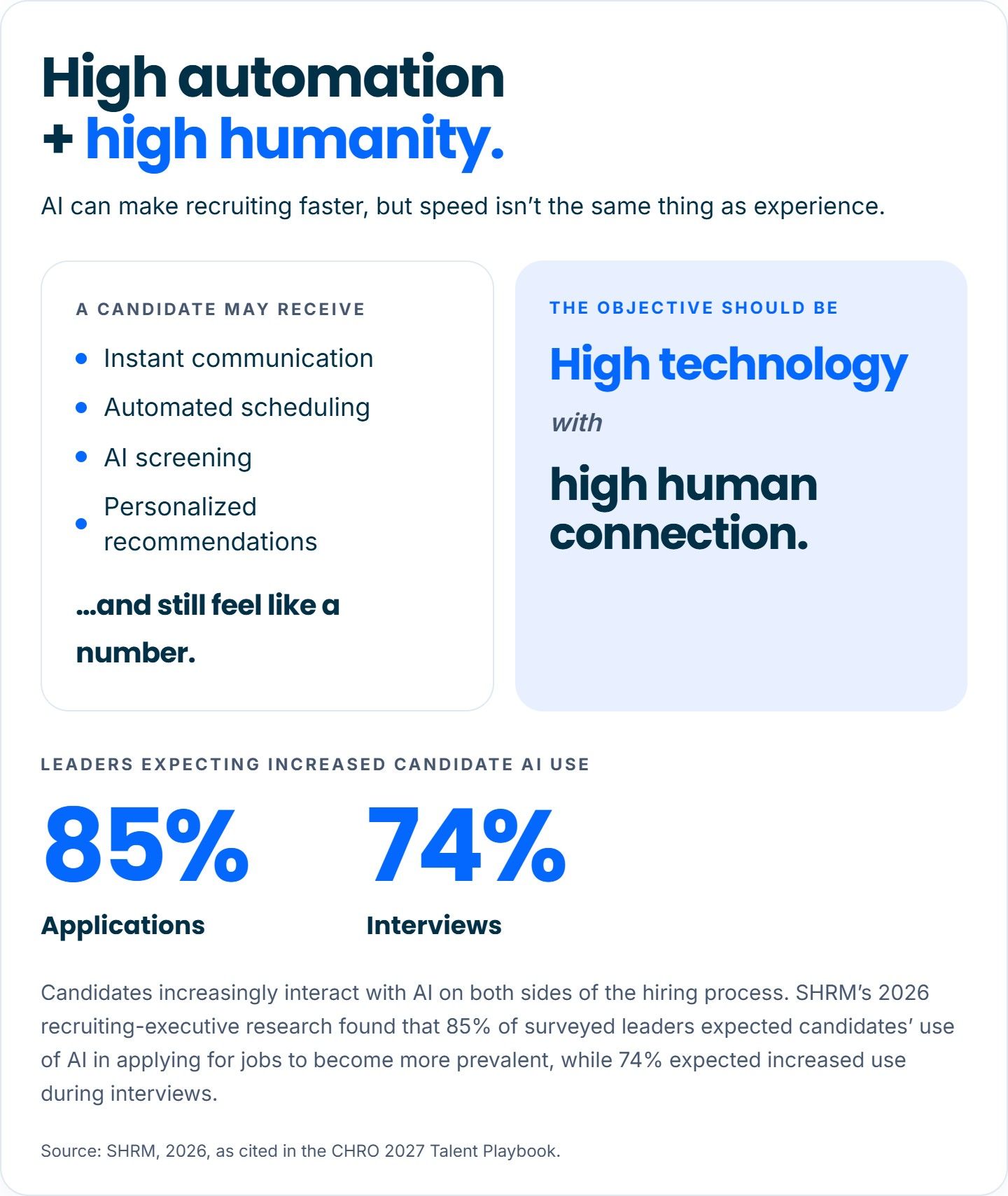
High automation plus high humanity.
AI can make recruiting faster, but speed isn’t the same thing as experience. As leaders plan for 2027, the candidate side of the equation deserves as much attention as the recruiter side.
That is why 2027 planning needs a defined starting point. The year 2027 came up repeatedly as leaders considered changes to recruiting processes, technology, and support.
Start with one defined need.
Planning becomes more useful when it starts with a defined need. You do not need to redesign everything at once. A focused change can give your team a clearer way to assess progress and decide what comes next.
What we recommend
A simple way to begin:
- Choose the part of hiring that most needs attention.
- Establish how it performs today.
- Agree what improvement would look like.
About NXTThing
At NXTThing, we start by listening to the people doing the work. Understanding what is getting in their way helps us bring the right recruiting support and technology to the problem.